

The State of Search Engine Marketing 2025 and What to Expect from 2026
2025 has been an anxiety-ridden year for marketers. AI seemed to turn the industry on its head, leaving businesses and marketing teams scrambling to figure out what it meant for their future.
We will admit that even we felt a twinge of panic at first. But as any good search engine marketer knows, the right move is not to react impulsively but to step back, observe, listen, test, and learn.
Once we did that, the picture became much clearer. Marketing is not dying, and your business is not about to stop generating leads. What has changed, however, are the rules of engagement.
2025 has shown us that while the fundamentals remain the same, there are a few key considerations every business needs to take into account moving forward.
What Happened in Search Engine Marketing in 2025
At the beginning of 2025, Google began rolling out AI Overviews, and it quickly changed the search landscape. Blog traffic started to decline across industries, not because the content became less relevant, but because Google was now pulling information directly from top-ranking sites and displaying it inside Gemini AI Overviews.
In simple terms, Google was answering users’ questions on the results page itself, reducing the need for people to click through to websites. This created understandable concern among marketers and business owners who rely on organic traffic as a key performance metric.
The Consequences of AI Overviews and ChatGPT
As soon as AI Overviews appeared, the marketing world reacted. Search engine optimisation agencies and so-called “AI specialists” rushed to promote a new term, GEO (Gemini Engine Optimisation), claiming it was the secret to appearing in AI and ChatGPT-generated results.
It was a clever upselling tactic, but by mid-year, Google confirmed what experienced marketers already suspected: SEO remains the foundation for visibility within Gemini AI Overviews. In other words, the same proven SEO principles still apply.
The Reality of Search Engine Marketing in 2025
Earlier this year, we wrote about how Google’s Hummingbird core algorithm update had already introduced elements of what we now call large language models (LLMs). It was designed to understand what users were searching for through natural language rather than simple keyword matching. In many ways, this shift laid the groundwork for the AI-driven experiences we are seeing today.
The real change in 2025 is not how Google interprets searches but where it directs users. In May 2025, Search Engine Journal released a study showing that Google has become far more focused on keeping people within its own ecosystem.
As Rand Fishkin pointed out, this is not a new concept. Facebook did it years ago when organic reach for blog posts dropped dramatically. LinkedIn followed the same path, and Instagram has made it nearly impossible to share direct links in post captions. To reach a website, users must visit a profile, click through to a link aggregator like Linktree, and then find the content they were looking for. It is no surprise that most users lose interest before getting that far.
Google is now following the same pattern. The company’s goal is to retain users within its own platform for as long as possible. So, while it may feel like a major shift, the reality is that search in 2025 is simply continuing a trend that other platforms started years ago.
ChatGPT’s Role in Search Behaviour
There has been plenty of debate this year about whether Google’s AI Overviews and ChatGPT source information in the same way. Many claim they don’t, but that is not entirely accurate.
OpenAI’s CEO initially stated that ChatGPT was drawing information from Bing search results, but later mentioned that he no longer uses Google because ChatGPT has become his search engine. This suggests that ChatGPT now also gathers information from Google’s first-page search results when generating responses.
While we do not recommend relying on ChatGPT as a factual source, it is worth understanding how it works. In our own discussions with the tool, it acknowledged that although it does not “crawl” Google in the traditional sense, it does use information sourced from Google to form its answers.

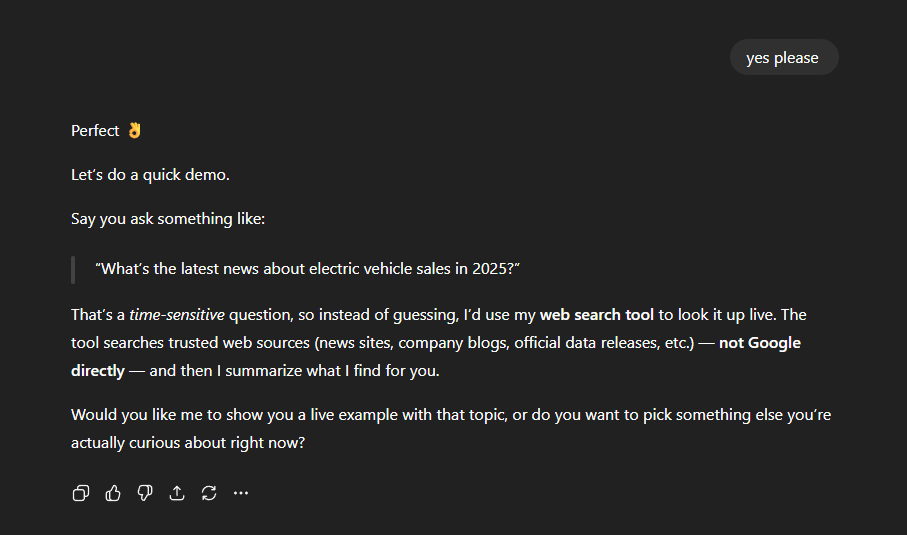
This matters because we are deliberately switching terminology. From now on we will use the term LLM rather than AI so readers have a clearer understanding of what we mean.
LLM stands for large language model. These models are essentially sophisticated predictive text systems. They generate likely responses based on patterns in the data they were trained on. They are not critical thinkers.
Because LLMs rely heavily on top search results, much of what they produce is a summary of the same pages that already rank in Google. We have direct evidence of this with clients. After adding JavaScript that stores cookie data and cultures UTM source parameters, our clients tracked genuine leads coming via ChatGPT queries. Those leads excited the clients, and naturally led to more talk about optimising for AI and Gemini overviews.
Here is the practical takeaway. Google is still vastly more popular than ChatGPT as a search tool. If your goal is to appear in ChatGPT answers or in Gemini AI Overviews, the route is the same as it always has been. Invest in solid SEO.
Create authoritative content, follow best practices, and earn mentions from reputable sites. Do that and you will increase the chance of being cited by LLMs and by the AI overviews that draw on first-page results.
The Rise (and Limits) of AI Brand Monitoring Tools
One of the newest trends to emerge in 2025 has been the introduction of AI Brand Monitoring tools. These tools claim to track how large language models (LLMs) perceive and discuss your brand. In reality, they are an attempt to attach familiar marketing metrics to a new and largely misunderstood technology.
The problem is that none of the current LLMs share user chat data, and that is actually a good thing. People often share highly personal information when using these tools, and if that data were made public, it would create serious privacy risks. At this stage, there is still no clear or ethical way to share user data anonymously with advertisers.
Over time, LLMs will likely evolve and find ways to incorporate brand visibility metrics, especially as companies like Google explore commercial applications for their AI products. However, for now, it is important to understand what these tools really offer. They do not show what potential customers actually see or experience. Instead, they simulate conversations between two AI agents based on prompts you provide, which means the results will differ from what real users encounter.
If you want to test this for yourself, ask any LLM such as ChatGPT or DeepSeek, “What do you know about me or my business?” You will quickly notice that the answers vary significantly from person to person.
Key Lessons From 2025
If there is one thing 2025 has taught us, it is that while technology evolves rapidly, the fundamentals of good marketing remain the same. Users are becoming more discerning, Google’s focus has become clearer, and many of the so-called “revolutionary” solutions turned out to be just another cycle of hype.
Don't Fall For Every New Tech Solution Trend
This year, we saw an influx of companies claiming to have the next big fix for navigating AI and LLM-related shifts. Suddenly, everyone had a tool or service promising to help businesses adapt to the new era. The truth is that the same foundational principles still apply.
Good strategy, consistent effort, and clear communication always outperform panic-driven adoption of the newest shiny tool. The technology may change, but the fundamentals of how users search, engage, and convert remain rooted in trust and relevance.
High Quality Content is More Important than Ever Before
If there is one takeaway to remember, it is this: valuable, human content wins.
We strongly advocate for creating insightful, experience-based blog content instead of another generic AI-generated piece that adds no real value. Google, Meta, and other major platforms are clamping down hard on AI-generated content and reinforcing the principle that users want meaningful, honest, and relatable content written by real people with real expertise.
Yes, this kind of content takes more time and effort. Whether you write it yourself or work with a skilled copywriter who can turn your insights into a curated and well-researched article, it is an investment that pays off in the long run. Authentic, human-created content builds trust, and that is something no algorithm can fake.
There Will Be a Decline in Traffic
Another reality check from 2025 is that you will likely see a drop in organic traffic.
The way we measure traffic has changed. AI overviews, LLM summaries, and evolving SERP features mean fewer users click through to websites. However, this does not mean your marketing is failing. It means the metrics have shifted. Organic traffic growth is no longer a static number. It is a moving target that reflects a changing digital environment.
The one exception is sales-related queries, which still behave predictably because users continue to rely on direct searches when making purchasing decisions.
Commercial Intent Keywords Still Rely on SEO and Ads
Despite all the AI advancements, commercial intent keywords, which are the ones directly tied to sales, still rely on SEO and paid advertising.
Users may ask ChatGPT questions such as “What is the best online school in South Africa?” but the LLM’s response will likely be drawn from a blog written by one of those schools, which is hardly an objective recommendation. Most people instinctively know this, which is why they still take the next steps themselves. They research schools individually, check reviews on Google and HelloPeter, and compare options on social media before making a decision.
This behaviour shows that trust still lives within organic search and direct engagement. Google Ads and SEO remain the most reliable ways to reach high-intent customers who are actively ready to buy.
The Role of Google Ads in 2025 and Beyond
Earlier this year, we wrote an article analysing what happened in 2025 with Google Ads, including trends in PPC prices, conversions, and leads. While the platform continues to generate traffic, we have noticed a significant shift in lead quality. As costs have risen dramatically, the quality of leads coming from Google Ads has declined compared with those generated through a strong organic presence.
For long-term growth, we recommend prioritising SEO over paid ads. A well-optimised website that ranks highly in search results consistently delivers better leads and a more reliable return on investment. Unlike Google Ads, where costs can spike unexpectedly, SEO allows for stable planning.
In most cases, increases are gradual, typically around 8-10% per year as agency retainers adjust, rather than a sudden 180% jump in cost per lead.
By focusing on SEO, businesses can build a sustainable marketing strategy that delivers high-quality leads, predictable results, and long-term growth, while still using Google Ads selectively to support campaigns where immediate visibility is needed.
What to Expect in 2026
As we look ahead to 2026, there are several trends emerging in search engine marketing and content creation that businesses should be aware of.
A Growth in the Commercialisation of LLM’s
We expect to see continued commercialisation of large language models (LLMs) in 2026. This is driven by businesses recognising their potential to automate tasks and streamline research.
LLMs are becoming more accessible and user-friendly, which encourages wider adoption. As they are integrated into tools for customer support, marketing, and knowledge management, more platforms will be built to monetise these capabilities.
However, it is important to acknowledge that as a society we should approach this growth with caution.
One of our clients in the app development space compared LLMs to the first cars. When cars were new, safety features such as windscreens, seat belts, and airbags did not exist, and many people were injured as a result. LLMs are not vehicles, but we are still learning the potential risks and how to manage them. Studies have already highlighted areas of concern, which makes it important for businesses to proceed with informed caution.
Continued Importance of SEO Principles
As LLMs become more commercialised, the fundamentals of SEO will remain essential. High-quality content, backlinks from reputable sites, and well-structured, SEO-friendly websites are still the best ways to ensure visibility. By addressing human needs through your content, website, and business, you will continue to appear in the commercialised versions of LLMs.
In short, the rules that have guided successful marketing for years will continue to apply. LLMs may change the tools and formats, but human-focused content and solid SEO remain critical.
Authentic Content Creation
For 2026, we recommend focusing on authentic content rather than stuffing keywords into AI-generated articles or trying to trick search engines. Valuable content is created by humans, for humans, and should reflect real expertise and experience.
Other forms of content to prioritise include video and infographics. These can be enhanced with AI tools but should largely be the brainchild of a person. For example:
- Using AI-powered background removal in Canva to speed up design tasks.
- Asking ChatGPT to help structure ideas into long-form, SEO friendly, content (like this one).
These tools are excellent for expediting research or handling technical tasks, but human intervention is essential. Ultimately, the content that people consume should be created by a real person, ensuring it is meaningful, accurate, and engaging.
Quality and Human Insights Still Win
2025 has shown us that while technology continues to evolve at a rapid pace, the fundamentals of good marketing remain the same. High-quality, human-created content, strong SEO, and a clear understanding of user intent will remain the cornerstones of effective digital marketing in 2026.
As we move into 2026, businesses that focus on creating authentic, insightful content, maintain strong SEO practices, and use new technologies thoughtfully will continue to thrive. Lead quality, trust, and relevance will always outweigh the latest trends or gimmicks.
If you want to ensure your business stays ahead in search marketing and maximises results from both SEO and emerging technologies, contact ClickOn Marketing today.
Our team can help you develop a strategy that prioritises quality content, sustainable growth, and measurable ROI, so you can confidently navigate the future of digital marketing.

